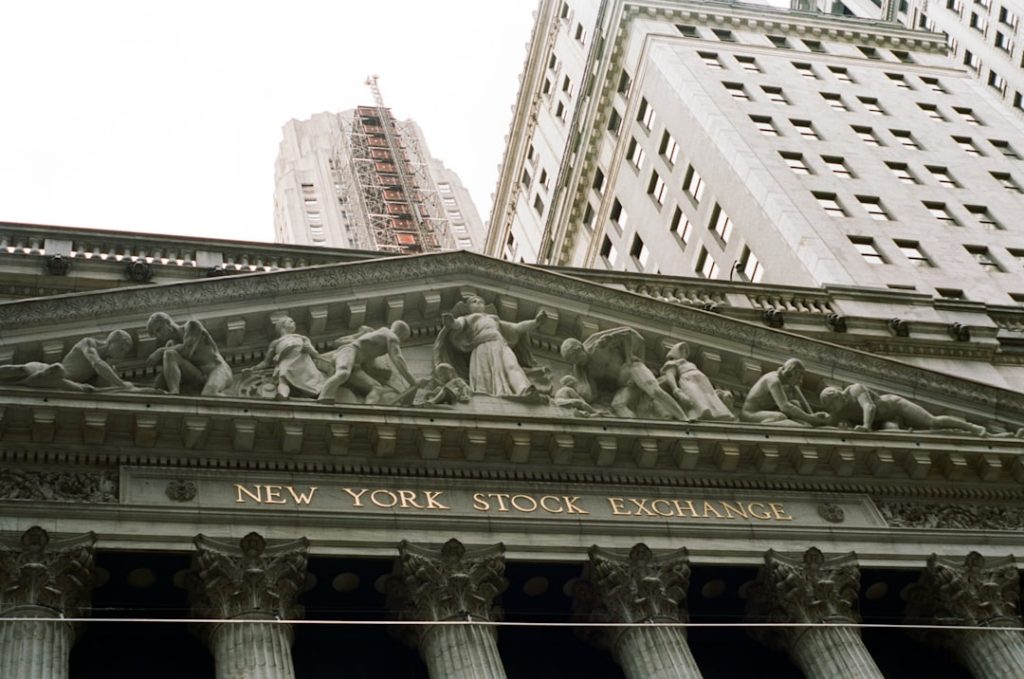
When markets swung violently in the weeks following a surprise Federal Reserve policy signal last year, a curious pattern emerged: retail investors who had consumed the most financial news content did not necessarily make better decisions than those who had consumed less. In some cases, they fared worse. The flood of real-time commentary, breaking alerts, and opinion-dressed-as-analysis had created something researchers in behavioral finance have long warned about — a condition where more information generates less clarity, not more.
The Information Glut and Its Hidden Costs
Financial journalism has never been more abundant. Dozens of outlets publish hundreds of market-related stories every day, and the rise of social media aggregators means a single earnings report can spawn thousands of derivative takes within hours of its release. For the average investor trying to separate actionable intelligence from ambient noise, this landscape is genuinely treacherous.
The problem isn’t that the information is false — though misinformation is certainly a growing concern — it’s that the sheer volume and speed of publication creates a kind of cognitive saturation. Professional traders operate with filters, risk desks, and quantitative models that help them discount irrelevant signals. Retail participants, who now make up a historically significant share of daily trading volume on major exchanges, rarely have equivalent tools. They are reading the same headlines as everyone else and trying to derive an edge from content that, by definition, is already priced in by the time they see it.
Why Context Has Become the Scarcest Commodity
Among financial media veterans, there’s a growing consensus that the industry’s fundamental failure isn’t speed or accuracy — it’s context. A headline announcing that a major index fell two percent tells you what happened. It tells you almost nothing about whether that movement is meaningful within the broader trend, whether sector rotation is at work, or whether the decline represents a structural shift or a temporary correction driven by thin holiday trading volumes.
This contextual gap is particularly acute around macroeconomic indicators. Inflation readings, jobs numbers, and central bank minutes are routinely reported as either unambiguously good or unambiguously bad news, when in practice their significance depends on a web of prior conditions, market positioning, and forward expectations that most brief news articles simply cannot accommodate. For readers who want to do more than track headlines, platforms offering deeper stock market insights — ones that weave together business, political, and macroeconomic threads — can provide something closer to that fuller picture.
The Retail Investor’s Evolving Media Diet
What’s notable about the current moment is that retail investors appear to be growing more sophisticated in how they consume financial content, even as the content itself multiplies. Survey data from brokerage platforms consistently shows that younger investors, particularly those who entered markets during the pandemic-era trading boom, are more likely to cross-reference multiple sources before acting on a piece of news. They are also more likely to seek out explanatory journalism rather than breaking news alone.
This shift has practical implications for financial publishers. Outlets that built audiences on speed are finding that their competitive advantage erodes quickly in an era when algorithmic feeds deliver breaking news to every device simultaneously. The publications gaining long-term reader loyalty tend to be those investing in analytical depth — pieces that explain not just what the market did, but why the reaction may or may not be proportionate, and what historical precedents might apply.
Structural Pressures on Financial Reporting
None of this is to romanticize a fictional golden age of financial journalism. The business pressures facing media organizations have always shaped editorial decisions, and financial reporting has never been entirely free of the incentive to sensationalize. A volatile market is good for page views; a grinding sideways consolidation is not. This creates a subtle but persistent bias in which dramatic events receive more coverage than their investment significance might warrant, while slow-moving but ultimately more consequential trends — demographic shifts, long-cycle commodity dynamics, structural changes in labor markets — get far less attention.
Regulators have also grown more attentive to the intersection of financial media and market behavior. The phenomenon of coordinated retail activity driven partly by social media commentary has prompted questions about where the line sits between journalism, commentary, and market-moving communication. Those lines, drawn for a different media environment, are overdue for serious reconsideration.
The investor who sat out the noise during last year’s volatility and returned to a simple question — what does the underlying business actually earn, and what am I paying for it — often ended up in a stronger position than the one who tried to trade every headline. The oldest disciplines in investing are proving surprisingly resilient in the information age, which suggests that the problem was never really about access to news. It was always about knowing what to do with it.