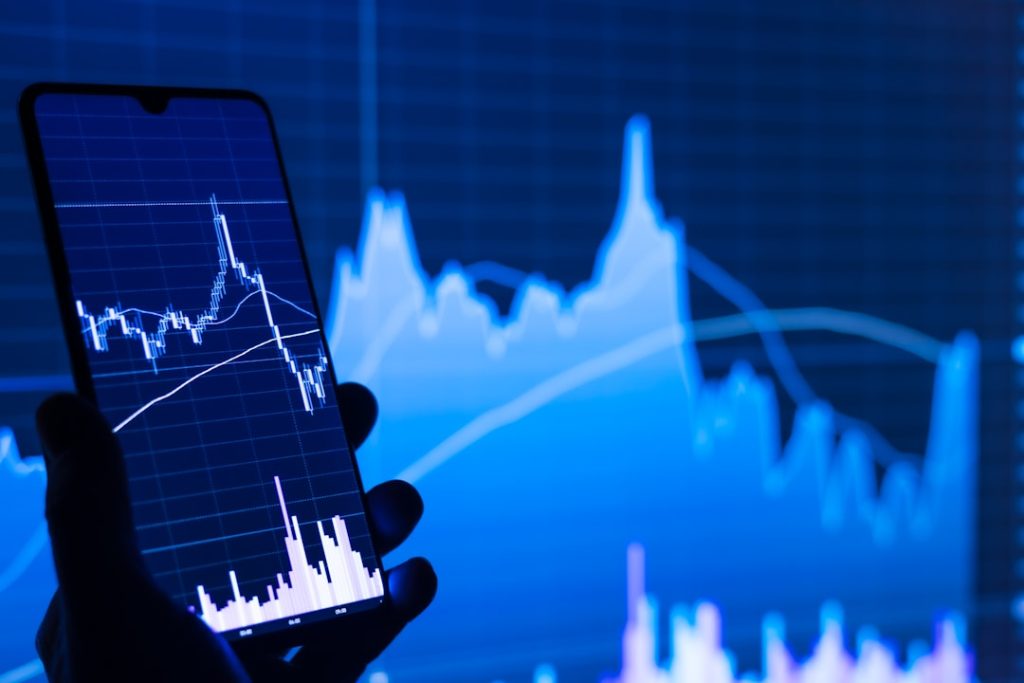
When the Federal Reserve chair pauses mid-sentence during a press conference, algorithmic trading systems can register the hesitation and begin repositioning portfolios before the sentence is complete. This is the reality of modern financial markets — an environment where the velocity of information has become as consequential as the information itself. The distance between a news event and its market impact has compressed from hours to milliseconds, forcing investors, analysts, and everyday traders to fundamentally reconsider how they source and process what they know.
Speed as a Structural Advantage
For most of the twentieth century, the information playing field was uneven but navigable. Institutional investors had Bloomberg terminals; retail traders had the morning paper. The gap was large but stable. What has changed — dramatically and perhaps irreversibly — is that the gap is no longer about access alone. It is about synthesis: the ability to contextualize breaking developments across economics, geopolitics, corporate earnings, and regulatory shifts simultaneously, and to act on that synthesis faster than competitors.
High-frequency trading firms have exploited this reality for years, co-locating servers within feet of exchange matching engines to shave microseconds off order execution. But the more interesting frontier is not at the nanosecond level — it is at the human level, where a trader digesting a central bank statement from Frankfurt while monitoring energy supply disruptions in the Gulf and watching Senate confirmation hearings in Washington must somehow arrive at a coherent investment thesis before the market moves. Increasingly, that task depends not just on access to breaking news but on the quality and editorial clarity of the sources being consulted.
The Politics–Markets Interface Gets Louder
One of the more striking developments of the past several years is how decisively political news has colonized financial decision-making. Trade policy announcements, sanctions regimes, and even domestic legislative maneuvering now generate immediate, measurable price action across equity, currency, and commodity markets. The correlation between political uncertainty indices and market volatility measures has strengthened considerably over the past decade, a trend that shows no signs of reversing.
This convergence has created demand for a different kind of financial news consumer — one who is as comfortable reading foreign affairs analysis as earnings reports. Practitioners at macro hedge funds have long inhabited this space, but the democratization of sophisticated trading tools has drawn retail participants into the same territory. For those navigating this landscape, staying current on developments across multiple domains simultaneously is not optional. Resources that aggregate the latest trading news alongside broader current affairs give retail and professional participants alike a consolidated vantage point that was functionally unavailable to most investors a generation ago.
When Noise Drowns Out Signal
The volume of market-relevant information has grown faster than most people’s ability to process it, which creates its own set of problems. A surge in financial news consumption does not automatically translate into better-informed decision-making. Research into behavioral finance consistently finds that information overload can push investors toward overtrading, recency bias, and narrative anchoring — attaching too much weight to the most recent or most emotionally resonant story rather than the most structurally significant one.
This dynamic is why the editorial quality of financial news matters more than sheer quantity. The ability to distinguish between a geopolitical development that genuinely reprices an asset class and one that generates headlines without substance is a skill that even seasoned professionals struggle to maintain under pressure. Some asset managers have formalized this challenge, building internal news-triage protocols that flag specific keywords and assign preliminary impact scores before human analysts engage with the content. Others rely on experienced editors at reputable publications to perform that filtering function on their behalf.
The Rise of the Informed Generalist
Perhaps the most underappreciated shift in financial markets is the premium now placed on broad contextual awareness over narrow technical expertise. A portfolio manager who understands only valuation models but cannot read a diplomatic communiqué is increasingly disadvantaged. The same is true in reverse: macroeconomic fluency without quantitative grounding produces confident but sloppy analysis. Markets are rewarding those who can move fluidly between disciplines — understanding how a shipping disruption in the Red Sea cascades through energy costs into inflation expectations and ultimately into bond yield pricing.
Educational institutions and professional training programs have been slow to adapt their curricula to this reality, leaving practitioners to develop cross-domain competency largely on their own, through sustained reading habits and deliberate exposure to unfamiliar subject matter.
The trader watching that Federal Reserve press conference — parsing tone, vocabulary, and body language in real time — is a vivid illustration of how far the information arms race has traveled. What began as an advantage exclusive to well-capitalized institutions has become the baseline expectation for anyone serious about participating in modern markets. The question is no longer whether to stay informed, but whether the frameworks for staying informed have kept pace with the speed at which the world insists on changing.