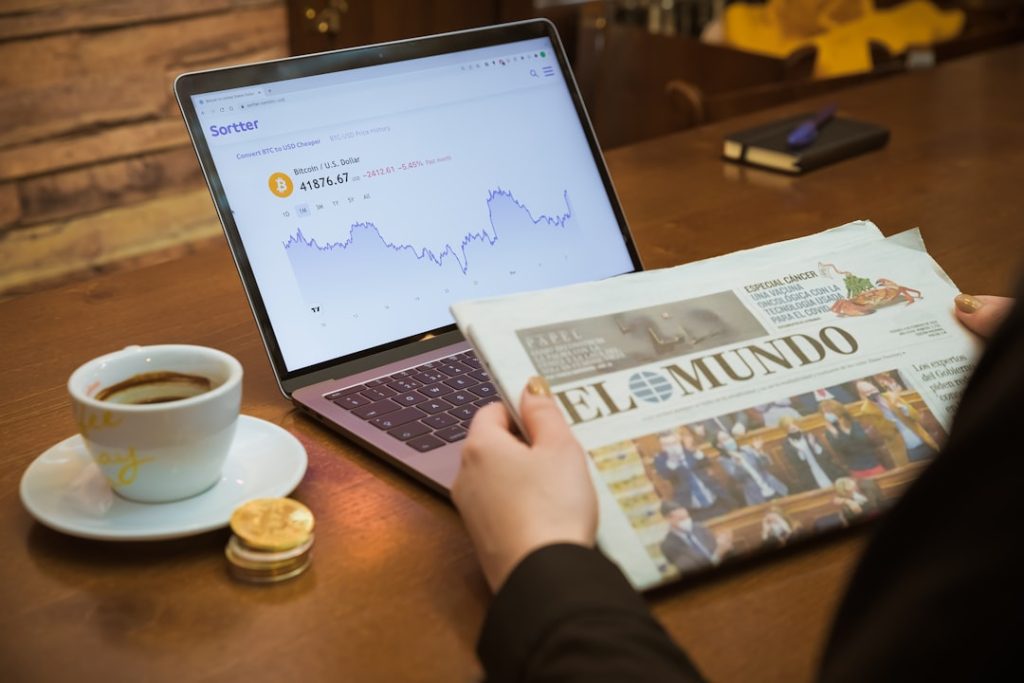
When a single Federal Reserve press conference can swing equity markets by three percent in under twenty minutes, the question for ordinary investors is no longer whether information matters — it’s whether they’re getting it fast enough. The democratization of market access over the past decade has been remarkable, but it has created an uncomfortable paradox: millions of new retail participants now operate in the same arenas as professional traders who have spent decades building information pipelines that arrive seconds, sometimes minutes, ahead of the crowd.
Speed, Interpretation, and the Retail Gap
Professional trading desks have long relied on curated data feeds, economic calendar alerts, and dedicated news terminals that cost tens of thousands of dollars annually. What has shifted dramatically in recent years is the narrowing — though not yet the closing — of that gap for individual investors. Broadband proliferation, mobile platforms, and a genuine explosion in financial media mean that a retail trader in Ohio or Ontario can, in theory, access breaking macroeconomic data within seconds of its release.
But speed alone is insufficient. The more consequential challenge is interpretation. A headline reading “inflation falls to 3.1%” can mean entirely different things depending on where it sits relative to market expectations, the composition of the underlying basket, and the policy outlook already priced into bond futures. Institutions employ economists specifically to decode those nuances in real time. Individual investors often have to navigate that complexity alone, using whatever editorial framework they can piece together from multiple sources simultaneously.
This is where the broader financial news ecosystem has evolved most noticeably. Resources covering the latest trading news across business, politics, and global affairs have become genuinely useful aggregation points for retail participants who need context, not just data, delivered across multiple asset classes at once.
The Politics-Markets Feedback Loop
One underappreciated driver of increased information demand among retail investors is the intensifying relationship between political developments and market outcomes. Trade policy shifts, sanctions regimes, election results, and central bank appointments now routinely produce sharper short-term market reactions than many traditional economic indicators. The 2022-2023 period illustrated this vividly: energy markets gyrated as much on geopolitical headlines as on supply data, while currency pairs responded to political rhetoric from major economies sometimes before analysts could formally model the implications.
For investors accustomed to focusing primarily on earnings calendars and macroeconomic releases, this expanded universe of relevant information represents a genuine adjustment. Following monetary policy alone is no longer sufficient preparation for managing a diversified portfolio. Elections in emerging markets, regulatory proposals in Brussels, legislative gridlock in Washington — these have become first-order variables for asset allocators in ways that would have seemed excessive to most retail participants even fifteen years ago.
What Good Financial Journalism Actually Provides
The proliferation of financial content online has created its own quality problem. Volume is not the same as value, and the internet is well-stocked with commentary that recycles wire service summaries without adding analytical depth or context. Distinguishing genuinely useful journalism from noise has become a skill in itself.
Quality financial reporting tends to share certain characteristics: it connects discrete events to broader structural trends rather than treating each development in isolation; it acknowledges uncertainty rather than projecting false precision; and it provides enough background that a reasonably informed reader can assess the significance of a development without extensive prior knowledge. The worst financial content, by contrast, traffics in dramatic framing — markets “plunging” or “surging” on moves that would have been considered routine a decade ago — because alarm generates clicks more reliably than calibration does.
Editorial discipline matters enormously here. Publications that maintain clear distinctions between reported fact, analyst opinion, and editorial interpretation serve their readers considerably better than those that blend these registers promiscuously. For investors making real decisions with real capital, that distinction is not an academic nicety — it directly affects how information should be weighted in a decision-making process.
The Long-Term Case for Information Hygiene
There is a growing body of thinking among behavioral finance researchers suggesting that information overload — consuming too much financial news, reacting too frequently — is itself a performance drag for individual investors. The counterintuitive implication is that the goal should not be maximum information consumption but rather deliberate, high-quality information consumption: fewer sources chosen carefully, read critically, and applied within a coherent investment framework.
That discipline is harder to maintain when markets are volatile and the temptation to check headlines every thirty minutes is almost architectural. But it may be the most important edge available to retail investors who cannot match institutional players on speed, computing power, or analytical resources. The investors who treated the volatility of 2020, 2022, and the successive geopolitical shocks of the mid-2020s as reasons to react proved, in aggregate, less resilient than those who used the same information environment to reaffirm pre-existing strategic positions — which takes us back to where this question started: not whether information matters, but whether the reader is equipped to use it well when it arrives.