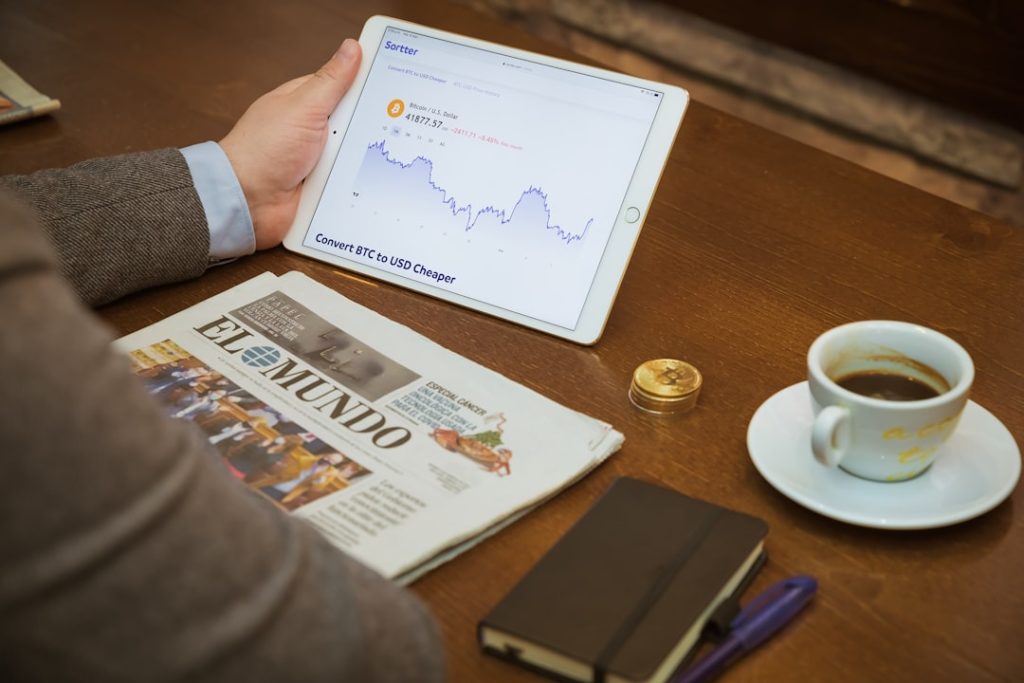
When the Federal Reserve moves its benchmark rate by a quarter point, markets can shift within seconds — not because algorithms are faster than humans, but because the humans feeding those algorithms have already consumed, filtered, and reacted to the information before most people have finished their morning coffee. This compression of the news cycle, from hours to minutes to near-instantaneous, has fundamentally altered how financial information travels, who profits from it, and what ordinary citizens actually understand about the economy they live in.
From the Trading Floor to the Scroll
For most of the twentieth century, financial journalism occupied a distinct lane: specialist publications for professionals, a brief segment on the evening news for everyone else. The divide was institutional and, frankly, class-based. Reuters terminals sat in trading rooms; the rest of the country waited for the morning paper. The democratization of the internet began eroding that boundary in the late 1990s, but the smartphone era completed the demolition. Today, the same headline that moves a hedge fund manager’s position is available, simultaneously, to a retired schoolteacher in Ohio checking her phone between appointments.
What has changed is not merely access but volume and velocity. Estimates from digital media researchers suggest that the average American adult now encounters several hundred news items daily — across social platforms, aggregators, push notifications, and traditional outlets — compared to roughly two dozen in a pre-digital media environment. The sheer quantity of information creates a paradox: more access to financial news has not obviously produced a more financially literate population. Understanding why requires looking at how that information is packaged, prioritized, and monetized.
The Aggregation Imperative — and Its Discontents
News aggregation platforms and digital-first publications have stepped into the gap between specialist financial media and the general public, attempting to translate market movements, earnings reports, and macroeconomic policy into language that a broad readership can act on. Platforms that track breaking financial news across multiple verticals — politics, world affairs, business, and markets — reflect a genuine editorial instinct: that the economy cannot be understood in isolation from the geopolitical and legislative forces shaping it.
The approach is not without critics. Veteran financial editors argue that compression breeds distortion — that reducing a complex earnings miss or a nuanced inflation report to a three-sentence summary strips the context that actually matters. There is also the incentive problem. Digital advertising revenue correlates heavily with page views and time on site, which rewards drama over nuance. A headline about a stock’s single-day collapse generates more clicks than a methodical explanation of why a sector’s fundamentals have quietly deteriorated over eighteen months, even though the latter is almost always the more important story.
Who Gains, Who Gets Left Behind
The uneven distribution of financial media literacy maps closely onto existing economic inequality. Surveys of media consumption consistently show that higher-income, college-educated adults are more likely to seek out long-form financial journalism, cross-reference multiple sources, and apply skepticism to market commentary. Lower-income adults, by contrast, are more likely to receive financial news through social media algorithms — environments optimized for engagement rather than accuracy. The consequences are not trivial. Retail investor behavior during periods of market volatility is measurably influenced by social media sentiment, sometimes to the detriment of individual portfolios.
The pandemic period offered a stark case study. Unprecedented fiscal stimulus, supply-chain disruption, and zero-interest-rate policy created a financial environment unlike anything in living memory. At the same time, a wave of first-time retail investors entered markets, many of them navigating the experience primarily through digital news channels and social platforms. The results were instructive: some individuals built meaningful wealth; others, chasing narratives rather than fundamentals, absorbed significant losses. The quality of the financial journalism they consumed was often the critical variable.
Toward a More Accountable Financial Press
The pressure on newsrooms is real and is not going away. Advertising models that once sustained investigative financial journalism have collapsed in many regional markets. The resources required to independently verify corporate disclosures, challenge official economic statistics, or pursue long-term accountability reporting are expensive — and increasingly concentrated in a handful of large national and international publications. Independent digital outlets have partially filled the void, though their editorial standards vary enormously.
What readers can do is develop a more deliberate posture toward the financial news they consume: distinguishing between reporting and commentary, understanding the commercial incentives of the outlet publishing a given story, and treating any single source as a starting point rather than a conclusion. The speed at which financial reality now travels from event to headline is unlikely to slow. The question is whether the institutions and individuals processing that information can develop the habits of discernment to match it — the same habits that separated informed investors from reactive ones long before the first news alert ever appeared on a locked screen.